RESEARCH REPORT — FEBRUARY 2026
A Majoriti Research Report on the structural challenges facing community leaders, and how to address them.
We are living in what experts are calling The Burnout Society

The Burnout SocietyThe Burnout Society is a concept from philosopher Byung-Chul Han’s 2010 book by the same name.
Han argues that modern society has shifted from a disciplinary model, where external authorities tell us what we can’t do, to an achievement-driven one, where we constantly tell ourselves what we should do.
This relentless self-optimization, fueled by the pressure to perform, produce, and be positive, has led not to freedom but to exhaustion, depression, and burnout.: we’re tired, polarized, and spending much of our free time scrolling through feeds that tend to leave us feeling empty.
At Majoriti, we’re driven by the belief that community is part of the answer. But for communities to become a meaningful force in society, they need to be taken more seriously.
Across the platforms we visit daily (hourly?), “community” is one of the most used words. Yet much of what goes by that name today serves other purposes: email lists in exchange for content, influencers who mimic closeness and call us their friends, and brands offering belonging as a side effect of a transaction. The word “community” gets used, but what it points to often isn’t there.
The thing is… humans seek community because they crave belonging, purpose, and the feeling of mattering. Real communities can offer all three in ways that few other structures can.
Many communities today, though, fall short of that potential. They tend to be understructured and dependent on the energy of one or two people who figured things out as they went.
That’s why this report exists: to understand what’s actually happening in communities… not from textbooks, but from the people building them with their own time, resources, and commitment.

We interviewed 13 community leaders across Israel, Latin America, and the U.S. We recorded and transcribed each interview, identified recurring patterns, and combined those findings with our own experience and research. This report is the result, built to give you the insights and tools to lead with more confidence.
The names of the leaders and their communities have been changed throughout this report to protect their privacy. The stories are real.
A brief intro into the world of communities
Read moreWho leads communities and how they got there
Read more4 pain points affecting almost every community
Read more5 recommendations you can implement today
Read moreLearn more about who's behind this report
Read moreBefore getting into what we found, let's start with something that sounds obvious but… clearly isn't. What even is a community?
Ask ten people and you'll get ten answers. Some say it's just enough for a group of people to share something in common to be considered a community: a religion, a neighborhood, an ethnicity. Others say there has to be a shared mission that unites them. But is there actually a consensus... or is this something each of us just gets to define?
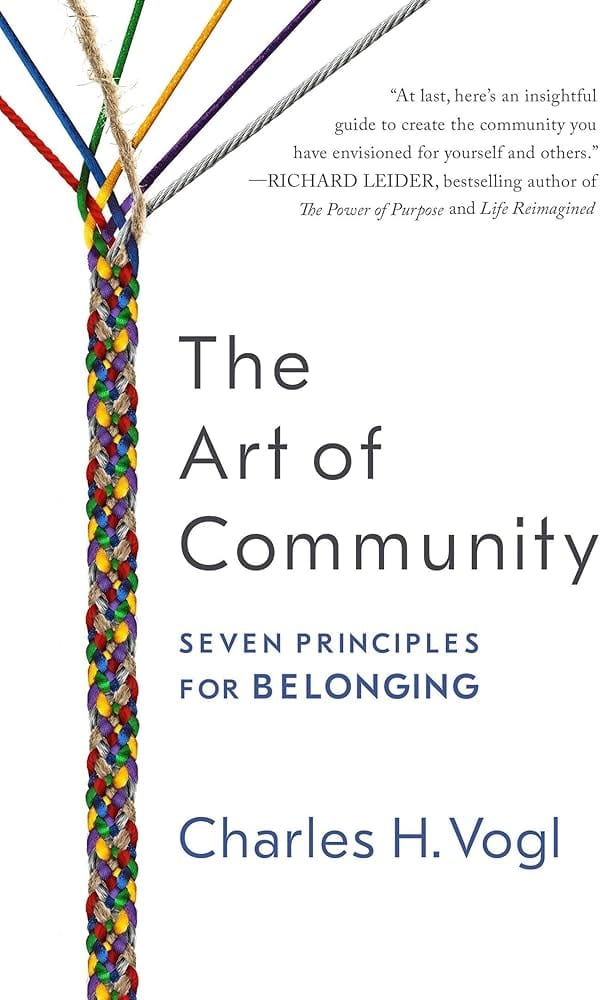
To try and answer that, we’ve delved into a lot of reading. Two books that really helped us were “The Art of Community”
The Art of CommunityMany people think of “community” as something that happens by accident or emerges naturally over time. But in The Art of Community, Charles Vogl shows that there are specific principles that leaders can use to create or strengthen communities. Drawing on three thousand years of tradition, Vogl lays out the seven enduring principles that every community of every kind—whether formal or informal—must master to be effective.View on Amazon → by Charles H. Vogl, and “The Business of Belonging”
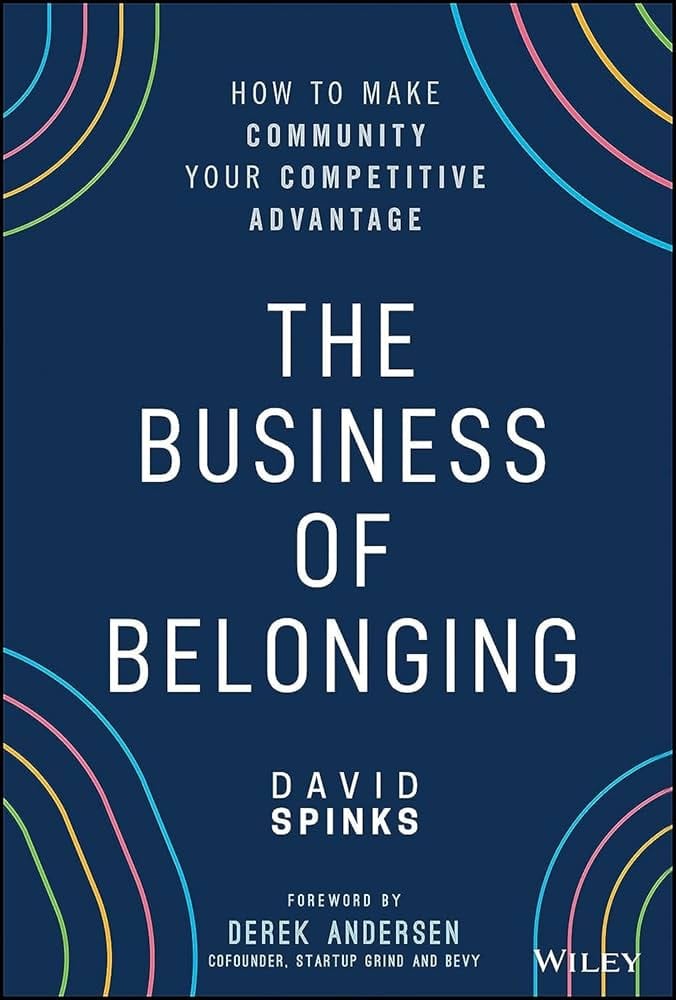
The Business of BelongingThe rise of the internet has brought with it an inexorable, almost shockingly persistent drive toward community. From the first social networks to the GameStop trading revolution, engaged communities have shown the ability to transform industries. As business community expert David Spinks shows in The Business of Belonging, the successful brands of tomorrow will be those that create authentic connection, giving customers a sense of real belonging and unlocking unprecedented scale as a result.View on Amazon → by David Spinks. It was actually in Spinks’ book that we found one of the most widely accepted definitions of what a community is… coined back in 1986 by McMillan and Chavis in their Sense of Community Theory.
It’s interesting that leaders describe it as a feeling, and yet that feeling rests on clear foundations. Psychologists McMillan and Chavis identified four of them: Feeling of Belonging, Sense of Mattering, Fulfillment of Needs, and Shared Emotional Connection. The framework is nearly 40 years old and it still holds up.
What was surprising to us is that most communities we spoke to are failing to deliver more than one or two of these to their members.
Not all communities are born the same, and understanding how yours came to be shapes what you, as a leader, can realistically do to improve your members’ experience. Based on our research, we've identified the following spectrum of belonging.
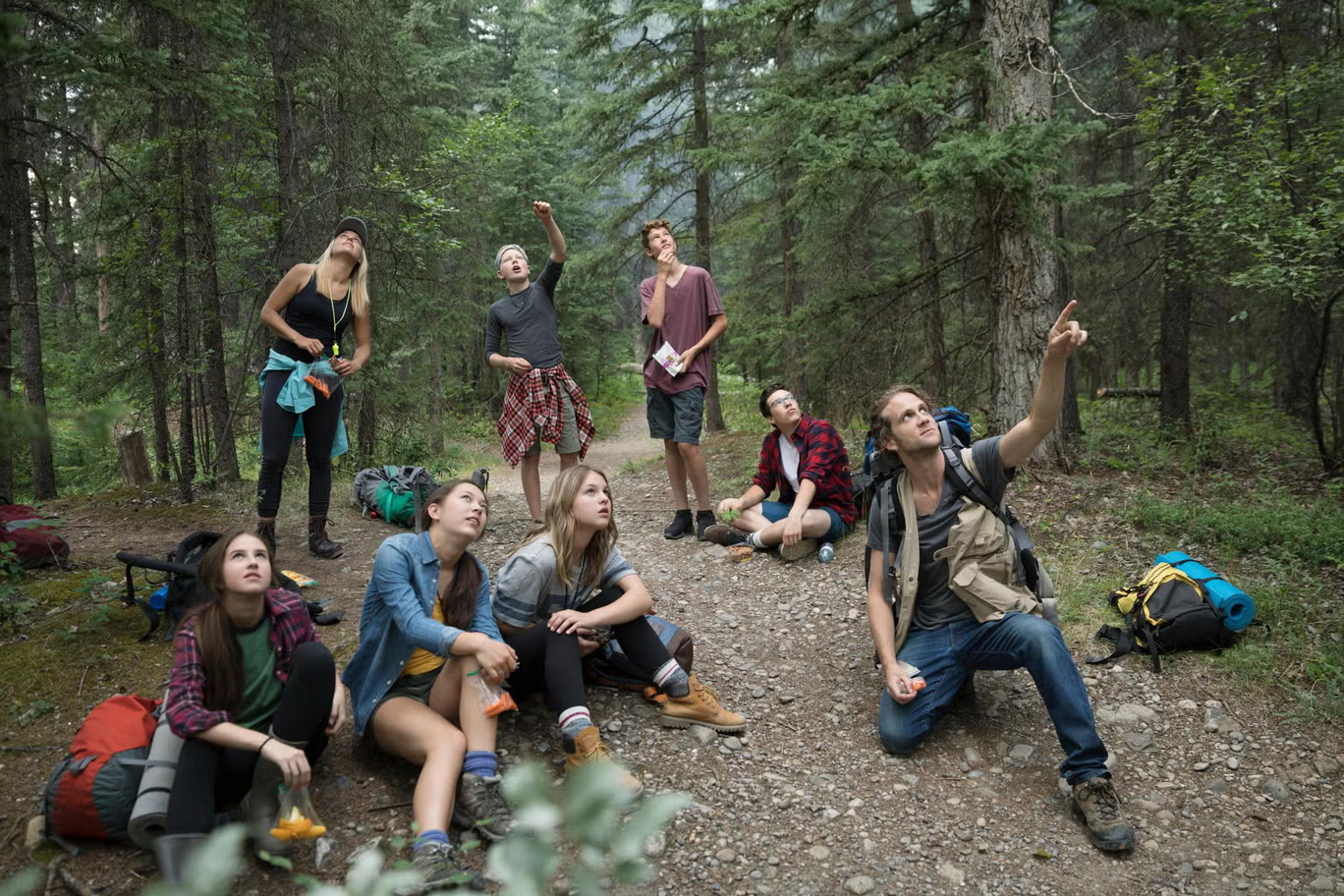
Communities that are 100% chosen. Members stumble into them. They find out that other people care about this weird thing they care about and suddenly there’s a group. Someone finds an online community of people photographing birds in the forest and thinks… wait, this is my thing. The belonging is active, discovered, sometimes accidental.
Click to flip for moreThe members who find their way into these communities tend to be genuinely passionate: engagement is usually high and motivation doesn’t need much pushing. The challenge is that growth is slow and unpredictable, and the community’s identity can be hard to articulate to outsiders, which makes it difficult to attract new members intentionally.
Communities where potential members already share something: a background, a pain point, a profession. When a community forms around that, belonging clicks fast. Immigrants building a network in a new country. Designers who find a product built exactly for their world. These communities make visible something members already had in common.
Click to flip for moreThe shared foundation gives leaders a significant head start: trust forms faster and members arrive already motivated to connect. The challenge is that the shared identity can become a ceiling: once the obvious common ground is covered, it can be hard to deepen the community beyond it.
Communities where members belong by osmosis. The clearest example: students graduate from a program, so now they’re alumni. These members don’t seek out the community, the shared experience creates the belonging.
Click to flip for moreThe built-in membership base is a real asset: the community exists before the leader has to do anything. But that same passivity is the core challenge: members didn’t choose to join, so convincing them to actively participate requires significantly more effort than in the other two types.
One last thing,
David Spinks, in The Business of Belonging, said something that really changed our perspective on communities:
People don’t usually arrive to communities looking for belonging... they arrive with a pain point that needs solving. That’s the entry point. As community leaders, our job is to understand that pain, deliver real utility, and then build an environment so safe and inviting that people move from utility to unity.
A brief intro into the world of communities
Read moreWho leads communities and how they got there
Read more4 pain points affecting almost every community
Read more5 recommendations you can implement today
Read moreLearn more about who's behind this report
Read moreThe role of “community leader” is one that’s usually figured out on the go, intuitively, without much knowledge of how or why they do the things they do.
Across our 13 interviews, we identified there’s 3 ways in which most people end up leading communities:
EXPLORE TYPES OF LEADERS
They never planned to start a community… it just happened. They made a Facebook group, hosted one dinner, organized one event, and suddenly there was a community.
By the time they realized they were running a community, they were already deep into it.
Angela opened a Facebook group for people interested in birdwatching, not thinking much of it. Then someone in the group asked if there were any in-person activities… she hadn’t planned one, but said “oh, people are interested, so let’s do that.”
After that first event, something clicked: “I didn’t think that I was building a community when I started. Only after I realized, OK, this is a community.” It wasn’t designed. It just emerged.
When people think of community managers, they think of someone hired for the job. We call this The Explicit CM: someone brought in to run a community that already exists, usually because the founder felt it was outgrowing them.
Marina was hired after the founder felt it was time to hire a full-time community manager. She arrived to a community across 12 countries and spent her first week just sorting through the mess — “the spreadsheets didn’t match the website.” From there she became a one-person operation: communications, events, design, meeting notes, outreach. Everything.
But the interviews showed us that there’s also another type of community manager, which we call The Implicit CM.
These are people who were never hired to do this job, but naturally emerge as the person responsible for managing communities that aren’t necessarily defined as such, like an alumni network or a community within a company. They tend to be community-oriented by nature, and the community work usually lands on top of everything else they already do.
Laura came into a startup from product marketing, but when it came time to figure out go-to-market, she gravitated toward people instead of paid channels — “I went to my safe place, which is people.” The community wasn’t the plan; it emerged because it felt natural to her. Naturally, she became an implicit community leader.
For them, the community isn’t a project but an extension of a personal calling, whether spiritual, social, or moral. Members follow because of conviction, not structure. This gives these communities unusual depth and loyalty, but it also creates a tension that most of these leaders are aware of: the community and the message feel like the same thing, which makes succession and delegation genuinely difficult.
What happens when they step back?
Mateo’s community was inseparable from his conviction about recycling, and from him personally. He onboarded every volunteer, set the culture, held the vibe.
When he left, he learned the hard way that “it’s not just transferring the role, it’s transferring the soul.” The new leader didn’t carry it, the volunteers felt abandoned, and “the community kind of died.”
A brief intro into the world of communities
Read moreWho leads communities and how they got there
Read more4 pain points affecting almost every community
Read more5 recommendations you can implement today
Read moreLearn more about who's behind this report
Read moreThe same tensions kept coming up for most leaders. Note that these aren't isolated problems but symptoms of communities generally being led without structure, the right tools, or relevant understanding on how to take on this challenge.
EXPLORE ALL FINDINGS
01
Leadership Burnout
On leadership dependency, burnout, & the fragility of one-person operation
One of the clearest patterns across our interviews was this: most community leaders are burned out. The reasons vary, but the underlying dynamic is consistent: everything depends on them, and they're constantly going above and beyond just to keep things running.
Take Mateo, founder of an emerging recycling community, who built and ran the organization largely on his own for years: managing volunteers, coordinating rescues, handling operations, and running a recycling plant. He describes himself as someone with an extraordinary amount of energy, and acknowledges that without that, GreenLoop probably would've never existed. But even he burned out, multiple times. As he put it, "this was physical infrastructure, wearing many hats at once. And at some point, even with all that energy, you're just treading water because this is what you built and you have to keep it going."
But even in communities with multiple people heading them, the weight can land disproportionately on one person. Take MoveTribe, a grassroots fitness community started by four friends. When the community started gaining traction and big sponsors came knocking, the workload didn't split evenly. Daniela, one of the co-founders, described how she ended up carrying around 85% of the work for their biggest event to date, while the others, busy with their own jobs, were only weighing in with a yes or no. Without clearly defined roles, the person with the most energy or availability ends up absorbing everything by default.
And even when community management is a formal, paid position, the overload persists. Marina, who runs a regional network for legal professionals spanning more than ten countries, described how hard it is to grow the community when most of her hours go into operational tasks. She handles communications, events, graphic design, and coordination with 260 collaborators. In practice, her role is multiple jobs compressed into one.
02
Weak Infrastructure
On scattered tools and systems built for everything but community.
Another pattern we observed clearly across interviews: community leaders are building their communities with whatever tools they happen to have. Not tools designed for community building, just whatever is available.
The most common denominator was WhatsApp. Nearly every leader we spoke with mentioned it as their primary communication channel, while also acknowledging its limitations. Mateo described his infrastructure as “very basic… just WhatsApp for coordination, Google Sheets for timetables and CRM and everything.” An alumni community tried Slack first, then email… neither worked. As Maya described it, nobody engaged on those platforms, so they defaulted to opening a WhatsApp group. This wasn’t a strategic decision but the path of least resistance.
The consequence of building on tools that weren’t designed for community is that leaders lose visibility into their own communities. Maya described wanting to know what her 200+ alumni are doing professionally, where they work, how their careers are evolving, but having no way to track or access that information. Daniel from another international alumni network shared a similar gap. He told us about how through their WhatsApp chat in the Netherlands, two alumni who didn’t know they were both living there ended up finding each other and sharing an apartment. A great outcome! But it happened by accident, not by design. If leaders had tools that allowed members to see who else is part of the community, where they are, and what resources they can share, moments like these would be happening more often. (FYI: these are the moments that make communities special)
There are leaders who have managed to build something more intentional despite the limitations. Laura runs her community through Discord for the broader group, with a Google Sheet tracking 150 members by name, and she follows all of them on social media. She knows who her power users are, who’s drifting toward competitors, and who’s most engaged. She built a system that lets her identify and activate her most valuable members… and it has worked wonders. But when asked what would happen to the community if she left tomorrow, her answer was clear: it would lose its power. The infrastructure she built lives largely in her head and in her relationships. It’s been highly effective, but almost impossible to hand off to someone else.
03
Missed Potential
On missed potential, stalled projects, and the gap between vision & capacity
Communities have big goals and great intentions. But talking to our leaders, we consistently found a gap between what they want to achieve and what they’re actually able to do. Most pointed to a lack of resources as the main blocker.
Angela, from the birdwatching community mentioned earlier, described a long-standing goal of writing an updated species guide for Israel. The only existing reference is a book from the 1990s, and her community has already been discovering species that aren’t in it. They’ve been talking about this project for years, but it remains stuck. The scientific work requires lab equipment and funding they don’t have, and the community’s volunteer core, however passionate, hasn’t been able to move it forward. Gabriel, who leads a meditation and philosophy study circle in South America, described a different kind of ambition: expanding into other countries by forming local leaders who could run their own communities. He recognizes that the in-person experience is on a completely different level than online classes, and that the potential to replicate it exists. But to get there, the school would need to develop some kind of leadership training program, and that structure doesn’t exist yet.
These are real limitations. But communities are not companies. Their strength doesn’t come from having more money or more clients; it comes from having engaged members. That’s a community’s actual competitive advantage. And what we observed across interviews is that most communities don’t have a structured plan for members to increase their contribution and help the community grow. This connects directly to the infrastructure gap we described earlier: if you don’t have visibility into who your members are and what they’re capable of, you can’t ask them for help in a meaningful way.
Going back to these examples, consider what might be different if Angela had a way to share her goals with the community and a path for members to contribute. Or if Gabriel could map which of his students across South America have the commitment and skills to lead a local chapter. The skills and willingness likely exist within the community already. But without a structure that surfaces them and channels them into contribution, leaders are left trying to do everything themselves, and ambitious projects stay on the shelf forever.
04
Lack of a clear identity
On the lack of a unifying story, identity confusion, and the naming problem
Surprisingly, many of the community leaders we interviewed struggled to articulate what they actually offer their members.
Lucía, who leads Puentes, a community for Spanish-speaking immigrants, was candid about this. When asked what a member would say Puentes gives them, she said she doesn’t think members feel part of a community yet. They come because there’s an interesting activity and it’s free, and maybe the people are nice. But the sense of belonging to something larger isn’t quite there. She herself described struggling to identify with Puentes, not because she disagrees with its goals, but because those goals were never clearly defined to her when she took on the role.
David Spinks addresses this directly in The Business of Belonging. He argues that the more specific a community’s identity, the stronger the belonging. His example: a community “for bikers” is broad and vague, but a community for dad bikers in a specific city who meet weekly to grab coffee after their ride is immediately recognizable. People can see themselves in it. They know what to expect, what they’re joining, and who they’ll be joining with. Contrast that with Lucía’s experience: Puentes serves Spanish-speaking immigrants in New York, which is a real shared identity, but the community offers everything from yoga to company visits to women’s circles to volunteering. The breadth makes it hard for any single member to say what Puentes is, and even harder for their leader to communicate it.
This pattern showed up across different community types. Emerging communities that never planned to become one often never paused to define a clear mission or vision. Identity-based communities that formed around a shared experience, like graduating from the same school, assumed the shared background was enough to hold people together. In both cases, very few leaders were able to clearly articulate what their community does for its members and why it matters.
And this happens in part because, like we said, communities are not companies. A company without a clear value proposition and product-market fit is a recipe for failure. But because communities form around more emotional drivers, people still show up and will stay in your Whatsapp groups even when they’re not being given much value. There’s a kind of passive belonging that sustains communities well past the point where a business would have lost its customers. If communities operated like companies, many of their members would not be repeat clients.
A brief intro into the world of communities
Read moreWho leads communities and how they got there
Read more4 pain points affecting almost every community
Read more5 recommendations you can implement today
Read moreLearn more about who's behind this report
Read moreThe five recommendations below don’t require a bigger budget or team. They require stepping back and making a few intentional decisions that most leaders never had the chance to make in the first place.
A brief intro into the world of communities
Read moreWho leads communities and how they got there
Read more4 pain points affecting almost every community
Read more5 recommendations you can implement today
Read moreLearn more about who's behind this report
Read moreToday, many people describe our time as one of disconnection: burnout, endless scrolling, and a growing sense that work and online spaces rarely offer real belonging or purpose. Yet across the world, communities continue to emerge as a powerful antidote. When people gather around shared curiosity, values, or challenges, something different happens: collaboration appears, meaning deepens, and individuals begin to feel part of something larger than themselves.
At Majoriti, we are building a community ourselves as we believe deeply in the potential of communities to counter isolation and unlock collective creativity. This belief led us to conduct this research with community leaders across different countries and contexts, seeking to understand what makes communities thrive and what holds them back.
Majoriti is a collective initiative born in Tel Aviv developing infrastructure to empower communities and unlock collaboration at a global scale.
If you lead a community and want to unleash its potential, we should talk!
Email us at hello@majoriti.world or just send us a WhatsApp
A brief intro into the world of communities
Read moreWho leads communities and how they got there
Read more4 pain points affecting almost every community
Read more5 recommendations you can implement today
Read moreLearn more about who's behind this report
Read more